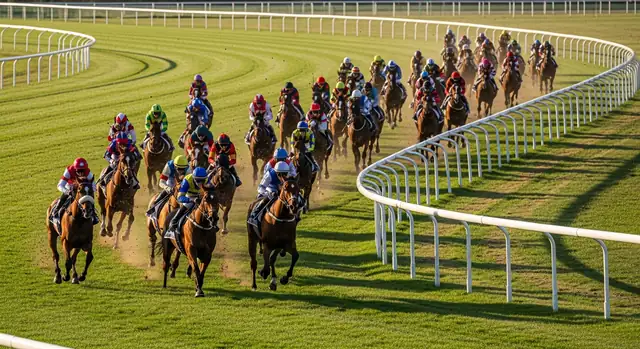
What Are Going Conditions in Horse Racing?
Going conditions describe the state of the racing surface, determined primarily by moisture content in the ground. In British and Irish racing, the going is assessed by the clerk of the course using a penetrometer — a device that measures how far a weighted probe sinks into the turf. The going is then described on a standardised scale that ranges from Hard at one extreme to Heavy at the other, with Good sitting in the middle as the benchmark condition.
The official going descriptions used in British racing are: Hard, Firm, Good to Firm, Good, Good to Soft, Soft, and Heavy. In Ireland, an additional description of Yielding is used between Good and Soft. All-weather surfaces use their own scale: Fast, Standard to Fast, Standard, Standard to Slow, and Slow.
How Going Affects Race Times and Performance
Ground conditions have a measurable impact on race times. A horse running over a mile on Good ground at Ascot might complete the distance in 1 minute 38 seconds. The same horse on Heavy ground could take 1 minute 48 seconds or longer — a difference of over 6%. This time differential increases over longer distances, making going conditions particularly influential in staying races and National Hunt events.
Softer ground demands more physical effort per stride because the horse's hooves sink further into the surface, reducing the energy return with each footfall. This explains why stamina-laden horses with a powerful, round action tend to excel on soft and heavy ground, while lighter-framed horses with a quicker, more economical action prefer faster surfaces. The biomechanical demands of different going conditions are a key reason why some horses' form varies dramatically with the ground.
Reading Going Preferences in Form Guides
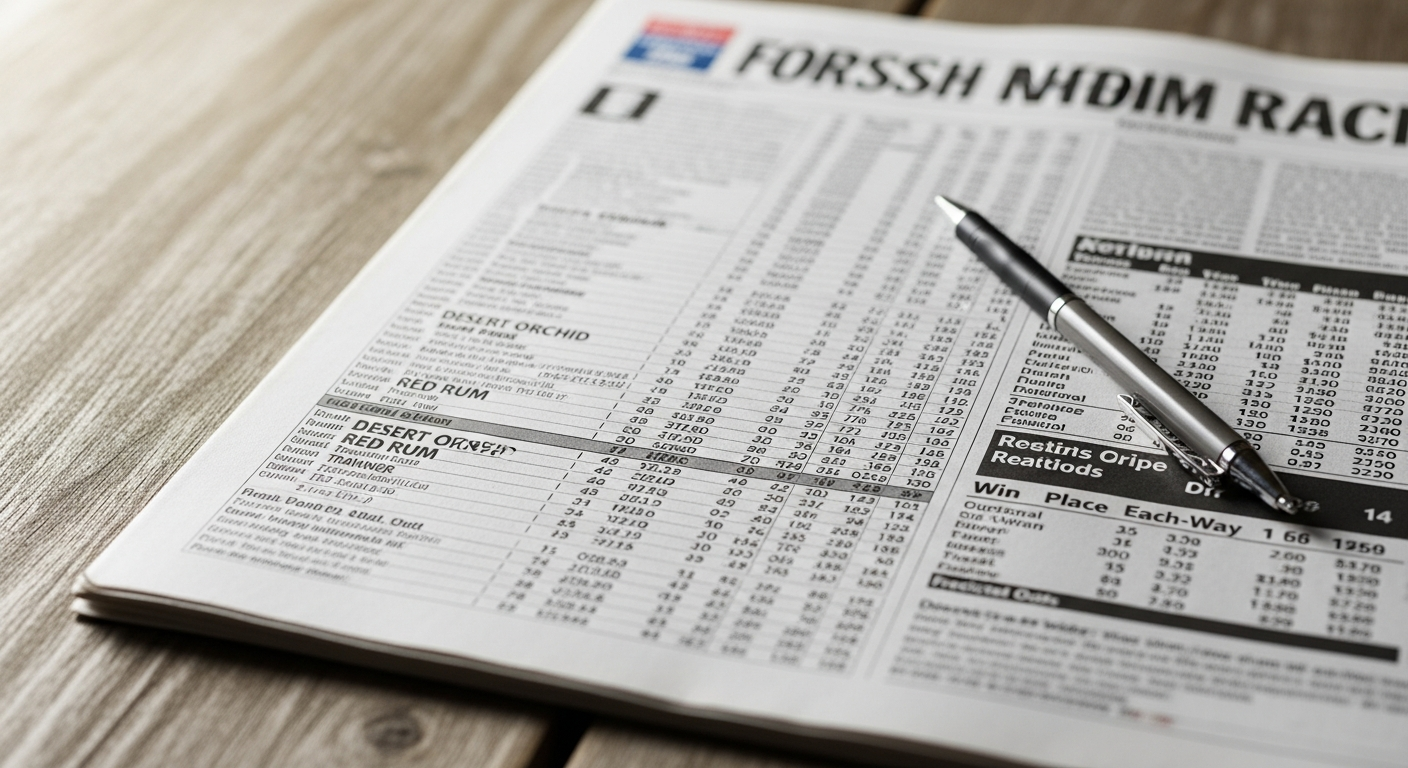
Every horse develops going preferences based on its conformation, breeding, and running style. Form guides typically display a horse's record on different ground types, allowing punters to assess whether conditions suit. A horse described as a "soft ground specialist" will have demonstrably better form figures on Soft and Heavy going than on Good or firmer surfaces.
When analysing form, look for the going description next to each previous run. A horse showing form figures of 1-2-1 on Soft ground but 6-8-0 on Good to Firm clearly has strong ground preferences. Breeding also provides clues: progeny of stallions like Yeats, Sageburg, and Mahler tend to relish soft ground, while offspring of Dubawi, Showcasing, and Acclamation generally prefer faster surfaces. Our racecards display the going for every race to help you make informed decisions.
How Weather Forecasts Affect Betting Markets
Professional punters and bookmakers monitor weather forecasts constantly in the days before a race meeting. A forecast of heavy rain can cause significant market movements as horses known to handle soft ground shorten in price, while those with a preference for faster ground drift. These movements can create value opportunities for punters who understand going preferences and can anticipate market shifts.
The Met Office provides detailed forecasts for all 59 British racecourses, and many courses publish their own weather stations' data. Clerks of the course update the official going at least twice on race day — once in the morning and once before the first race — and can change it between races if conditions alter significantly. Rain during a meeting can transform the ground from Good to Good to Soft within an hour.
Going Conditions on All-Weather Surfaces
All-weather tracks in Britain use three different surface types: Polytrack (Chelmsford, Kempton, Lingfield, Wolverhampton), Tapeta (Newcastle), and Fibresand (Southwell). These synthetic surfaces are designed to be less affected by weather than turf, though they are not entirely immune. Heavy rain can create a layer of surface water on Polytrack, making it ride slower, while very cold temperatures can cause Tapeta to ride faster than usual.
All-weather surfaces use their own going scale (Fast, Standard to Fast, Standard, Standard to Slow, Slow), and form on one surface type does not always translate to another. A horse with strong Polytrack form may struggle on Fibresand, which rides much deeper and demands more stamina. When assessing all-weather form, always note which specific surface the horse ran on.
Practical Tips for Using Going Data
The most effective approach to going analysis combines three factors: the horse's proven going record, its breeding profile, and the current conditions relative to recent weather. A horse with no soft ground form is not necessarily unable to handle it — it may simply never have been asked. Similarly, a horse that ran poorly on heavy ground as a juvenile may handle it better as a mature, stronger adult.
Track-specific going knowledge adds another dimension. Some courses drain quickly and rarely ride genuinely heavy (Cheltenham, Ascot), while others hold water and can become testing after modest rainfall (Haydock, Catterick). Understanding these course characteristics helps you anticipate how the ground will ride regardless of the official description. Use our betting calculator to work out potential returns, and check our fast results to see how ground conditions affected today's racing.