
Lingfield
Standard (AW - Polytrack)9 races
Fields, race times and going in one clear view. Compare the evidence, check the details and make your own call.
19:40 · Newcastle

Joint shortest available odds
5f · Standard (AW - Tapeta)
18+ · Offers subject to eligibility and bookmaker terms.
Check the full racecardSelected by the shortest available racecard odds, not an editorial tip. Prices can change; winning is not guaranteed.
FIND YOUR MEETING
Choose a day, region or course. Each time opens the full race detail.
Public race feed is temporarily unavailable
THE CARD, AT A GLANCE
Standard (AW - Polytrack)9 races
Soft (Good to Soft in places)8 races
Standard (AW - Tapeta)9 races
RaceCards.co.uk brings the day’s UK racing into a practical, meeting-by-meeting view. Find a race by course and time, open the full card for runner details, and use the same starting point to plan for tomorrow.
Start with the British meetings shown above, then follow the information that matters to your research: the declared runners, race distance, going, recent form and available prices. This page connects those daily cards with plain-language guides, published tips and results. You can follow the sport without placing a bet, and there is no need to choose a horse in every race.
START WITH THE CARD
A racecard is the race-by-race programme: it identifies the course and off time, then lists the horses declared for each contest. Open an individual race to review its available runner information, including form, jockey and trainer details, market prices and race conditions.
Treat each detail as a clue, not a verdict. A horse’s recent figures make more sense when read alongside the race distance, ground and level of competition. Declarations and conditions can change, so revisit a card if you are checking it well before the start.
Check the date as well as the time, especially when switching between today and tomorrow. A race title may describe an age restriction, handicap or novice event; those conditions help explain why the horses are competing together. Read the full race rather than comparing names from different meetings as though they faced the same test.
How to read a racecardTODAY OR TOMORROW
Tomorrow’s cards appear as race information is made available. Early fields can be provisional; check the latest racecard for the current runners, race time and conditions rather than assuming an early listing is final.
Use today’s list to follow the live schedule and tomorrow’s list to begin form research. The day selector keeps both views close at hand, while the full racecard pages provide the detail behind each meeting and time.
Planning ahead is useful for identifying courses and races to study, but it is not a reason to assume a complete market is already available. Missing prices do not mean every runner has the same chance. Return on race day to check withdrawals, updated ground reports and the information actually available for each horse.
Browse tomorrow’s racecardsGROUND & COURSE
Going describes the ground underfoot, from firm through to heavy. It can affect a race’s pace and the demands on each runner. Course layout matters too: turns, gradients and the shape of a finish make every venue a different test.
Read the course report alongside a horse’s past performances, but remember that conditions may change during the day. For a plain-language guide to the terms, see our overview of racing ground conditions.
Rain does not affect every track equally, and a weather forecast is not a substitute for the official going description. Look for evidence that a runner has handled a similar surface and distance. Even that evidence needs context: a small sample of previous runs cannot prove how a horse will perform under different conditions today.
Understand going and groundFORM IN CONTEXT
Form figures summarise finishing positions and notable events from a horse’s previous runs. They are a compact record rather than a forecast: the race type, distance, ground and strength of the field all help put those results in context.
Compare like with like where possible. A result over a different trip or surface may tell a different story, and a single strong figure does not guarantee the same performance next time.
A finishing position alone also leaves out field size and the circumstances of the run. An unplaced effort in a stronger race can be different from an unplaced effort against weaker opposition. Where available, consider the wider race record and the gap between appearances instead of treating a string of figures as a simple ranking.
A guide to reading formUSEFUL BETWEEN RACES
Go from a meeting to the detail you need: results, withdrawals, race guides and tips are all a click away.
UK RACING, TWO CODES
British racing includes Flat races and National Hunt races over hurdles or fences. All-weather racing takes place on artificial surfaces, so a report of “Standard” should not be read as the same condition as good turf ground. Check the race type and surface before comparing a runner’s recent form.
Start with today’s UK meetings, then open the individual race for its distance, class and declared field. For a runner-by-runner search, use the runners directory. After the race, check today’s results rather than treating a market price as a finishing position.
KNOW WHAT YOU ARE READING
The meeting rows display the race information returned by our racing feed. Missing information is marked as unavailable or pending, not replaced with an invented runner count. Tomorrow’s programme can change, and advertised off times do not guarantee that a race will start at that exact minute.
Our published racing selections are separate from the declared field. A selection is not a result, and an odds-based rating is not an independently verified chance of winning. Read the full racecard, confirm withdrawals and check the bookmaker’s current price before deciding whether to bet. Choosing not to bet is always an option.
FROM THE CARD TO THE CONTEXT
A useful racing routine separates the facts of a contest from opinions about its outcome. The racecard describes the event and the declared field; a market price describes an offer at a point in time; a tip is a selection. Use the explanations below to keep those different types of information in context.
TODAY’S TIPS
A racing tip gives you a horse to investigate, not a reason to skip the racecard. Start by matching the selection to its course, date and race time. Then check whether the horse is still declared, whether the conditions suit the reasoning and whether the quoted odds remain available. An opinion written earlier can be less relevant after a withdrawal or a substantial change in the ground.
Our today’s horse racing tips page is separate from the meeting list. Readers planning ahead can check tomorrow’s racing tips when selections are available. Compare the explanation with your own reading of the field rather than assuming a shorter price makes a bet automatically worthwhile. A selection can lose even when its reasoning is sensible, and a winning result does not prove that every earlier assumption was correct.
PRICES, NOT PROMISES
The favourite is the runner at the shortest price in the market being considered. Two or more horses can share that position as joint favourites. Our homepage feature uses the shortest available valid runner odds in an upcoming UK race; it is a market-based feature, not the same thing as an editorial tip. If some prices are missing, the available list is not a complete picture of every bookmaker’s market.
Fractional 2/1 is decimal 3.00, while evens is decimal 2.00. A shorter price gives a smaller winning return for the same stake, but it does not remove uncertainty. Dividing one by decimal odds gives an odds-implied percentage, not an independently verified probability. Read our guide to horse racing odds and starting prices to distinguish an advertised price from the price used for settlement.
WHEN THE FIELD CHANGES
A non-runner is a horse withdrawn from the race. That changes the field you are assessing and can affect the pace, the betting market and the terms available. Use the non-runners page alongside the latest individual card. If you have already placed a bet, the operator’s settlement rules determine what happens; do not assume a withdrawal always produces the same refund or deduction.
After the off, switch to today’s fast racing results rather than interpreting prices or declaration order as finishing positions. An enquiry or objection can affect the outcome, so distinguish an early report from a confirmed result. For a previous meeting, use yesterday’s results. When checking a bet, match the exact race and apply the bookmaker’s published settlement terms rather than relying only on a headline result.
WEIGHTS & RATINGS
In a handicap, the weights are designed to reflect the horses’ assessed abilities within the rules of that contest. A higher official rating generally means carrying more weight than a lower-rated rival in the same handicap, subject to the race conditions, penalties and allowances. That is different from simply saying the horse carrying the least weight is the best selection.
Class describes the level of competition, while distance and eligibility conditions determine the test and who can take part. Moving between classes or returning over a different trip changes the comparison with a previous run. Our handicap racing guide, racing classes explainer and guide to race distances provide a starting point. Use ratings as one part of the evidence, not as a substitute for reading the race conditions.
FOLLOW THE RIGHT RUNNER
Jockey silks are the colours worn to represent a horse’s owner. They make a runner easier to follow, but similar colours can appear in the same race and owners with several runners may use distinguishing details. Always match the horse’s name and racecard number as well as the shirt. A missing silk image is missing visual information, not evidence that a horse has been withdrawn.
The jockey named on the card is another useful identifier, although riding arrangements can change. Read our guide to jockey silks for the basics, or explore jockey statistics and trainer statistics with care. A headline strike rate needs context about the sample, the period measured and the quality of the horses involved.
UNDERSTAND THE STAKE
Our betting calculators help explain how stakes and odds combine. At fractional 4/1, a winning £10 cash single returns £50 in total: £40 profit plus the £10 stake. That ordinary example does not automatically include deductions, commission, dead heats or promotional rules. Enter the actual terms and choose the relevant tool before comparing its output with a settled bet.
Multiple bets combine selections and can cost more than a reader first expects. A Lucky 15 contains fifteen bets across four selections, so a £1 unit stake costs £15 before any each-way doubling. Visit the types of bets guide and each-way betting explanation to understand the structure. Calculators check arithmetic under stated assumptions; they cannot identify a guaranteed winner or turn a risky bet into a safe one.
A PRACTICAL DAILY ROUTINE
For today, begin with the UK meeting list and choose a race you have time to study. Read the conditions, identify the active runners and compare the relevant form. Recheck the field and available price nearer the off if you are considering a bet. The next-off strip is a shortcut to a scheduled race, not a signal that you need to make a quick decision.
For tomorrow, focus first on the programme and the contests that interest you. Note which details are provisional and return when more information is available. Keeping a short record of your reasoning can make later review more useful: record the conditions and price you actually considered, not just whether your chosen horse won. You can use the racing questions library to look up unfamiliar terms without abandoning the wider research.
WATCHING UK RACING
A listed race time tells you when a contest is scheduled, not where it will be televised. Coverage depends on the meeting, the broadcaster’s rights and the day’s programme. Our guides to ITV horse racing, Racing TV and Sky Sports Racing explain the main viewing options. Check the broadcaster’s current listings before arranging your viewing.
Watching a race can add context to a bare result, such as how a runner travelled or where it met difficulty. Avoid turning one viewing into a certain prediction about its next start. A different field, pace or surface may create a different test. Combine what you saw with the documented race conditions and use the horse racing glossary when commentary uses an unfamiliar term.
STRAIGHT ANSWERS
Quick answers to common questions about the daily cards.
Use the meeting list above or open the today’s racecards page. Choose a course and race time to open the full card.
Yes. Visit tomorrow’s racecards to check the cards currently listed. Early details can change as declarations are updated.
Published selections are listed on the today’s tips and tomorrow’s tips pages when available. A tip is an opinion, not a prediction of a guaranteed result.
No. Betting prices can move and may differ by bookmaker. Confirm the current price, availability and full terms directly with the bookmaker before making a decision.
Going is the official description of the racing surface and its firmness or softness. Conditions vary by course and can change; check the latest course report and our guide to going.
Read racing news, race previews and analysis covering the horses, meetings and conditions behind the headlines. Open an article for the full story, and explore today’s racecards and racing results for more context.

A 15:04 UK-time racecard snapshot covering 4 meetings in Britain and Ireland, with remaining race times, distances, going and listed field sizes.
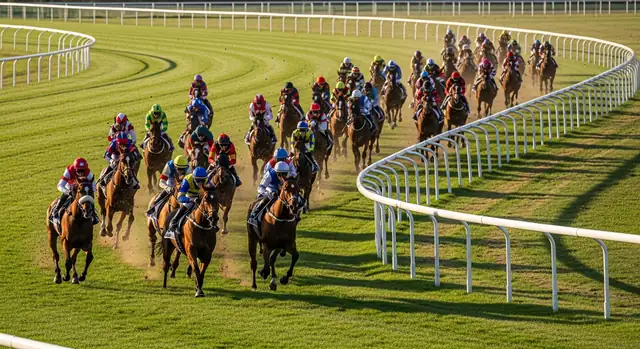
A 07:03 UK-time racecard snapshot covering 4 meetings in Britain and Ireland, with remaining race times, distances, going and listed field sizes.
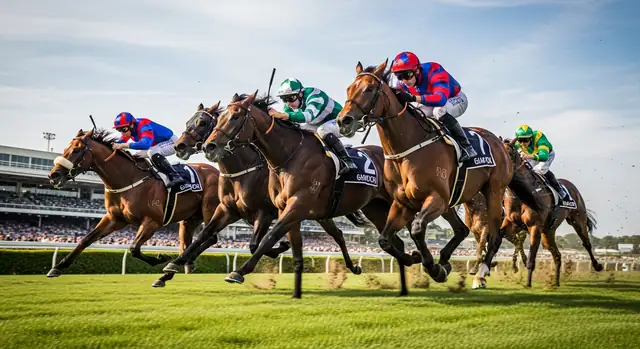
A 11:04 UK-time racecard snapshot covering 4 meetings in Britain and Ireland, with remaining race times, distances, going and listed field sizes.
Selections and bookmaker offers are not guarantees. Race information is provided to support your own research. Bet responsibly; 18+.
Meet the contributors behind our racing coverage. Open a profile to read their background and browse their published articles.
 JW
Racing Editor
18 years in racing journalism
Former Racing Post tipster and Timeform analyst. Covers major National Hunt festivals and specialises in Cheltenham and Aintree form analysis.
 SM
Betting & Tips Editor
Tipping professionally since 2018
Sarah Mitchell is a qualified data analyst turned racing journalist, combining statistical modelling with traditional form study. She has been tipping professionally since 2018 and achieved a verified 14% ROI across her selections in 2025. Her specialities include each-way value and handicap racing.
 DC
Data Science Lead
PhD in Statistical Modelling
Developed the AI prediction engine used across the site. Previously built quantitative models for sports analytics firms. Leads ongoing model refinement and accuracy tracking.
 TG
Irish Racing Specialist
12 years covering Irish racing
Based in County Kildare with close connections to leading Irish yards. Provides insight on cross-channel raiders and Irish festival form that regularly translates to Cheltenham.